
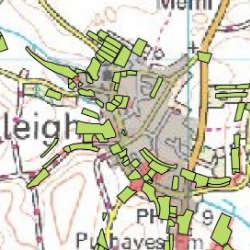
The Devon History Society Orchard Project is a DHS initiative to improve documentation of the decline of fruit growing in Devon – particularly East Devon – in the 19th century. It has now completed transcription of orchard data from Devon tithe apportionments c. 1840, and the summary report is now available.
Around 50 volunteers extracted orchard data from the Devon tithe apportionment transcriptions during November and December 2013. That information covering 470 parishes has now been collated and merged into a database.
https://www.devonhistorysociety.org.uk/research/devon-history-society-orchard-project-2013-14/
- Hits: 1515
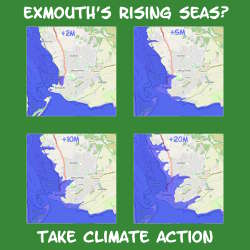
Are you worried about climate change? Do you live in East Devon? Here are some ways to take climate action in East Devon.
Take action in how you shop. Take action in how you travel. Take action by joining groups. Take action by supporting each other. Take action in non-violent protest.
- Hits: 1904
(for the 2020 The Devonshire Association President's Symposium)
Rachel Thomas has been the Chairman of the Exmoor Society since 2003 and served as President of The Devonshire Association in 2009. She joined the Countryside Commission in 1987, becoming Commissioner before its merger with the Rural Development Agency when it became the Countryside Agency, later Natural England. In her Presidential Address to the DA membership she described, “..a more integrated approach to rural development that recognises the natural capital of landscape (including natural beauty) and how this is linked to human wellbeing.”
Rachel was awarded a CBE in 1997 for services to the countryside, National Parks, forestry and rural development and has for many years served as a Deputy Lord Lieutenant of Devon.
https://devonassoc.org.uk/battleground-bred-the-exmoor-society/
- Hits: 1250
(for the 2020 The Devonshire Association President's Symposium)
Melanie Squires comes from a Cornish dairy farming family and has lived in Devon for the last 20 years. She joined the NFU South West team in January 2002 as a policy adviser, promoted to senior in 2003 and then to Regional Director in March 2006.
She holds a Non-Executive Director role on the Heart of the South West LEP Board which covers Devon and Somerset – appointed May 2017 as ‘Rural Champion’ and from 2020 also Place theme leadership chair for the LEP, which represents infrastructure, rural, coastal, digital, transport, energy and natural capital work delivery. She is a past trustee to the Seale-Hayne Education Trust and outgoing 2016/17 Chairman, and a longstanding SW CBI Council member.
Mel was awarded an MBE in 2008 for services to Gloucestershire’s rural community and for animal welfare efforts during the flooding of July 2007.
https://devonassoc.org.uk/south-west-farmings-positive-role-in-delivering-the-net-zero-solution/
- Hits: 1433
(for the 2020 The Devonshire Association President's Symposium)
Rosie Hails is Director of Nature and Science at the National Trust. She was formerly Director of Biodiversity and Ecosystem Science at the UK Centre for Ecology & Hydrology (UKCEH).
Rosie trained as an entomologist and population ecologist and has served on many committees including the Natural Environment Research Council (NERC) Science Board and the government’s advisory body the Natural Capital Committee. She is currently a member of Defra’s Science Advisory Council, and a Trustee and member of Council for the RSPB.
Rosie was awarded an MBE in 2000 for services to environmental research and is a Fellow of the Royal Societies of Biology and Entomology.
https://devonassoc.org.uk/restoring-nature-for-public-benefit/
- Hits: 1218
(for the 2020 The Devonshire Association President's Symposium)
Ian Bateman is Professor of Environmental Economics and Director of the Land, Environment, Economics and Policy Institute at the University of Exeter and Director of The South West Partnership for Environmental and Economic Prosperity. He is a member of the Natural Capital Committee reporting to The UK Chancellor of the Exchequer and advises the Secretary of State for the Environment, Food and Rural Affairs.
Ian was one of the architects of the H.M. Government 25 Year Environment Plan and a co-author of the H.M. Treasury Green Book guidelines for appraisal of public sector spending. He was awarded an OBE in 2013 for services to environmental science and policy and is a Fellow of the Royal Societies of Art and Biology.
https://devonassoc.org.uk/valuing-nature-unavoidable-and-necessary/
- Hits: 1265
(for the 2020 The Devonshire Association President's Symposium)
Clare Broom DL has a professional and academic background in nature conservation, planning and countryside management. She spent thirty years working as an academic in the University sector, and as Head of an Environmental Science Department lead a small agri-environment research team. She was Dean of Faculty at the University of Plymouth’s Seale Hayne campus and subsequently served as a Deputy Vice-Chancellor at the University. She has held DEFRA appointments on two of the Environment Agency’s Regional Flood and Coastal Committees. She has also worked as an environmental consultant.
Clare was a member of the National Trust’s Board of Trustees (2011–2017) and Chair of the Trust’s South West Regional Advisory Board and its predecessor (2006–2016). She served as an elected member of the Council of the National Trust for nine years until October 2018. She has been a Trustee of the Devon Wildlife Trust.
Clare lives in West Devon near Yelverton. Her family connections with Devon go back over two hundred years. She is a Deputy Lieutenant of Devon.
https://devonassoc.org.uk/presidents-symposium-2020-conclusion/
- Hits: 1198
(for the 2020 The Devonshire Association President's Symposium)
Clare Broom DL has a professional and academic background in nature conservation, planning and countryside management. She spent thirty years working as an academic in the University sector, and as Head of an Environmental Science Department lead a small agri-environment research team. She was Dean of Faculty at the University of Plymouth’s Seale Hayne campus and subsequently served as a Deputy Vice-Chancellor at the University. She has held DEFRA appointments on two of the Environment Agency’s Regional Flood and Coastal Committees. She has also worked as an environmental consultant.
Clare was a member of the National Trust’s Board of Trustees (2011–2017) and Chair of the Trust’s South West Regional Advisory Board and its predecessor (2006–2016). She served as an elected member of the Council of the National Trust for nine years until October 2018. She has been a Trustee of the Devon Wildlife Trust.
Clare lives in West Devon near Yelverton. Her family connections with Devon go back over two hundred years. She is a Deputy Lieutenant of Devon.
https://devonassoc.org.uk/presidents-symposium-2020-introduction/
- Hits: 1220
(for the 2020 The Devonshire Association President's Symposium)
Harry Barton is the Chief Executive Officer of the Devon Wildlife Trust – an organisation he joined in October 2011, having spent the previous five years as Chief Executive of the Earth Trust in Oxfordshire. He has worked for nearly twenty five years in the environmental sector, including spells at the Council for National Parks, Kew Gardens, CPRE and the Wiltshire Wildlife Trust.
Harry studied Geography at Durham University (BSc) and then Environmental Policy at Wye College, University of London (MSc). He has a passion for the environment and a particular interest in landscape scale conservation, having played a key role developing the Wildlife Trust movement’s Living Landscapes programme.
He firmly believes that spending time in the outdoors – especially in the wonderful Devonshire countryside – is essential in keeping us happy and healthy.
https://devonassoc.org.uk/building-a-nature-recovery-network-in-devon/
- Hits: 1162
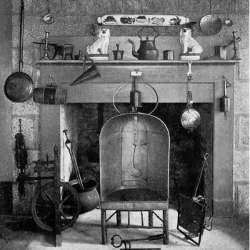
In these days of rapid changes and improvements, of universal education, and of ever-increasing facilities in the means of transport and communication, in even the most remote country districts the old order is rapidly changing and giving place to the new, and all things old are being ruthlessly swept away, and are disappearing one after another.
Although at the present time a considerable number of old farm-houses are still standing in Devon, much (at least as regards their outward appearance) as they stood from one to four or even five hundred years ago, yet in every year that passes one sees a marked decrease in their number, either from accident or by design. For on the one hand, owing to the dryness of their thatched roofs, their cob-walls, and their well-seasoned and often worm-eaten timber-work, they fall an all too easy prey to the demon of fire. While, on the other hand, many are yearly being condemned by the Medical Officers of Health, and rightly so, as “no longer fit for human habitation”, owing to the wilful neglect in some cases, and the inability through lack of means in others, of their owners to keep them in habitable repair.
Full title: The Old Devon Farm-House. Part I. Its Exterior Aspect and General Construction. by Charles H. Laycock.
(Read at Totnes, 21st July, 1920. Year published: 1920; Origin: DA Transactions; Pages: 158-191)
https://devonassoc.org.uk/devoninfo/the-old-devon-farm-house-part-i-1920/
Social Media:
Facebook: https://www.facebook.com/TheDevonshireAssociation (448)
Twitter: https://twitter.com/devonassoc (480) https://twitter.com/DABuildings (787)
- Hits: 1777


