The DofE charity works with organisations across the UK to help young people gain essential skills, experience, confidence and resilience to successfully navigate adult life.
Our ambition Millions have transformed their lives through the DofE. We now want to enable every young person in the UK to gain its benefits. By 2020/21 we aim to:
– Increase the number of young people starting a DofE programme per year to 350,000 (19/20 figure 295,490), with 20% (70,000) from disadvantaged backgrounds.
– Ensure an average completion rate of 60+%.
Activities Own your DofE and create your personal programme of activities: helping others, pushing yourself physically, gaining skills, exploring the countryside and, for Gold, going on a residential.
Social Media:
Facebook: https://www.facebook.com/theDofE (44k)
Twitter: https://twitter.com/DofE (35k)
Instagram: https://instagram.com/dofeuk (31k)
YouTube: https://www.youtube.com/theDofEuk (2.9k)
LinkedIn: https://www.linkedin.com/company/the-duke-of-edinburgh's-award (11k)
Celebrating an exceptional legacy, HRH Prince Philip KG, KT
As the founder of the DofE, HRH The Duke of Edinburgh has helped transform how millions of young people see themselves and see the world around them. Launched in 1956, the DofE offers young people the chance to take on their own challenges, follow their own passions, discover new skills and make a difference in their community.
To celebrate The Duke’s inspiring impact on generations of young people, we’re asking anyone who’s been in the DofE across the decades to help us build a powerful collection of your DofE stories, and inspire the next generation of young people to begin their DofE journey.
https://www.dofe.org/memories/
There are four main sections of a DofE programme; Volunteering, Physical, Skills, and Expedition. At Gold participants will also complete a Residential section.
Volunteering section
Volunteering is simple. It’s about choosing to give time to help people, the community or society, the environment or animals.
Your volunteering must not be done for a business but can be undertaken for a charity or not-for-profit organisation. Where your volunteering is in support of surplus generating work, for example a charity shop, then some Local Authorities may require a work permit. The charity you are volunteering with should be aware of this and support you as required.
For your volunteering activity you need to choose to give time to do something useful without getting paid (apart from expenses).
You can also volunteer in a team, which might be an easier way to find an activity if you can identify a local need you can help with.
Physical section
For your physical activity you need to choose any sport, dance or fitness activity – in short, anything that requires a sustained level of energy and physical activity. For example, playing a sport regularly and showing personal improvement would count. However, learning to be a coach in the same sport would be a Skills section activity, whilst being a volunteer coach counts for the Volunteering section.
Skills section
For your skills activity you need to choose an activity that will allow you to prove you have broadened your understanding and increased your expertise in your chosen skill. It should not be a physical activity, for example horse riding, as this counts towards your Physical section, however, you could choose to learn about caring for horses.
Expedition section
For your Expedition section, you will need to plan, train for and complete an unaccompanied, self-reliant expedition with an agreed aim. You must do the correct training for your level and mode of travel, at least one practice expedition, a qualifying expedition (the one that is assessed) and a final presentation in order to complete the section.
Your expedition must be completed by your own physical efforts (but you have loads of choices, not just on foot!) with minimal external intervention and without motorised assistance. Your route should also be a continuous journey.
Modes of travel: Foot, Bicycle, Boat, Canoe or kayak, Wheelchair, Horseback
Residential section (Gold Award only)
For your Residential section you need to undertake a shared activity or specific course with people you don’t know, in a residential setting away from home and in an unfamiliar environment. Evenings are often as much a part of the experience as daytime activities.
This section offers a high degree of flexibility but it must be done with an organised group, registered charity or Approved Activity Provider. You must join it individually and not with an existing group of friends or as part of a school or youth group trip. You will be staying away – anything from an activity centre or camp to a boat or barge – but you cannot stay with friends or relatives.
There are no age restrictions on who you can do your residential activity with, for example, a conservation project has volunteers of all ages on it – you may even be the only person under 25 or doing your DofE.
Your activity can be anything that provides you with an opportunity for broadening your interests and experiences. It is ideal for trying something new or it can be related to existing interests or activities followed in other sections of your DofE programme.
Donate
Prince Philip, Duke of Edinburgh, husband of Queen Elizabeth II of the United Kingdom and the Commonwealth realms, and the longest-serving royal consort in British history, died at the age of 99 on the morning of 9 April 2021, two months before his 100th birthday. Due to restrictions during the COVID-19 pandemic, members of the public were advised not to leave flowers in tribute to the Duke.
The Royal Family suggested that instead of leaving floral tributes at royal residences, the public could support charity.
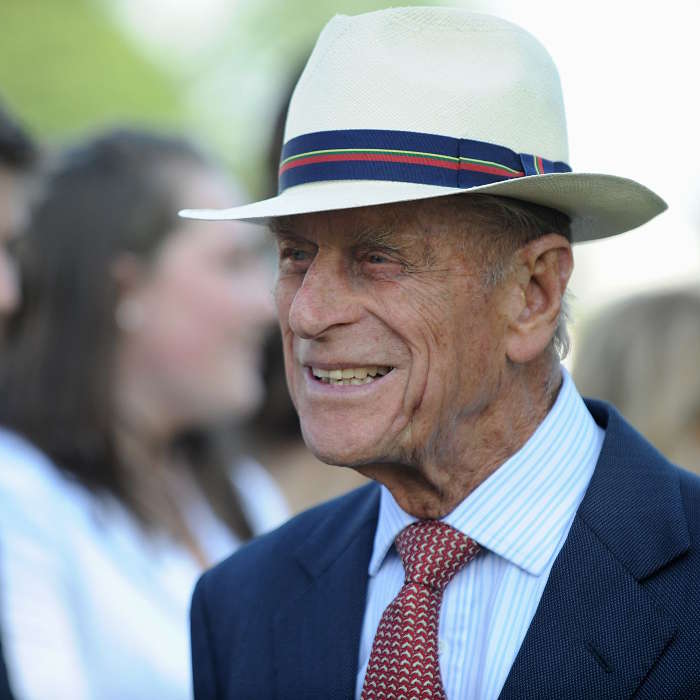
Wikipedia The Duke of Edinburgh's Award (commonly abbreviated DofE) is a youth awards programme founded in the United Kingdom in 1956 by Prince Philip, Duke of Edinburgh, that has since expanded to 144 nations. The awards recognise adolescents and young adults for completing a series of self-improvement exercises modelled on Kurt Hahn's solutions to his "Six Declines of Modern Youth".
In the United Kingdom, the programme is run by The Duke of Edinburgh's Award, a royal charter corporation. A separate entity, The Duke of Edinburgh's International Award Foundation, promotes the award abroad and acts as a coordinating body for award sponsors in other nations, which are organised into 62 National Award Authorities and a number of Independent Operators. Award sponsors in countries outside the United Kingdom may title their awards Duke of Edinburgh's Awards, though the recognition also operates under a variety of other names in countries without a historic link to the British monarchy, or that have severed such links.
https://en.wikipedia.org/wiki/The_Duke_of_Edinburgh%27s_Award